StandFinder Field Notes
Building community through local farmstands
Local farmstands can do more than sell a harvest. They create familiar gathering places, strengthen trust between growers and shoppers, and give neighbors a reason to connect.
In this guide · 16 sections
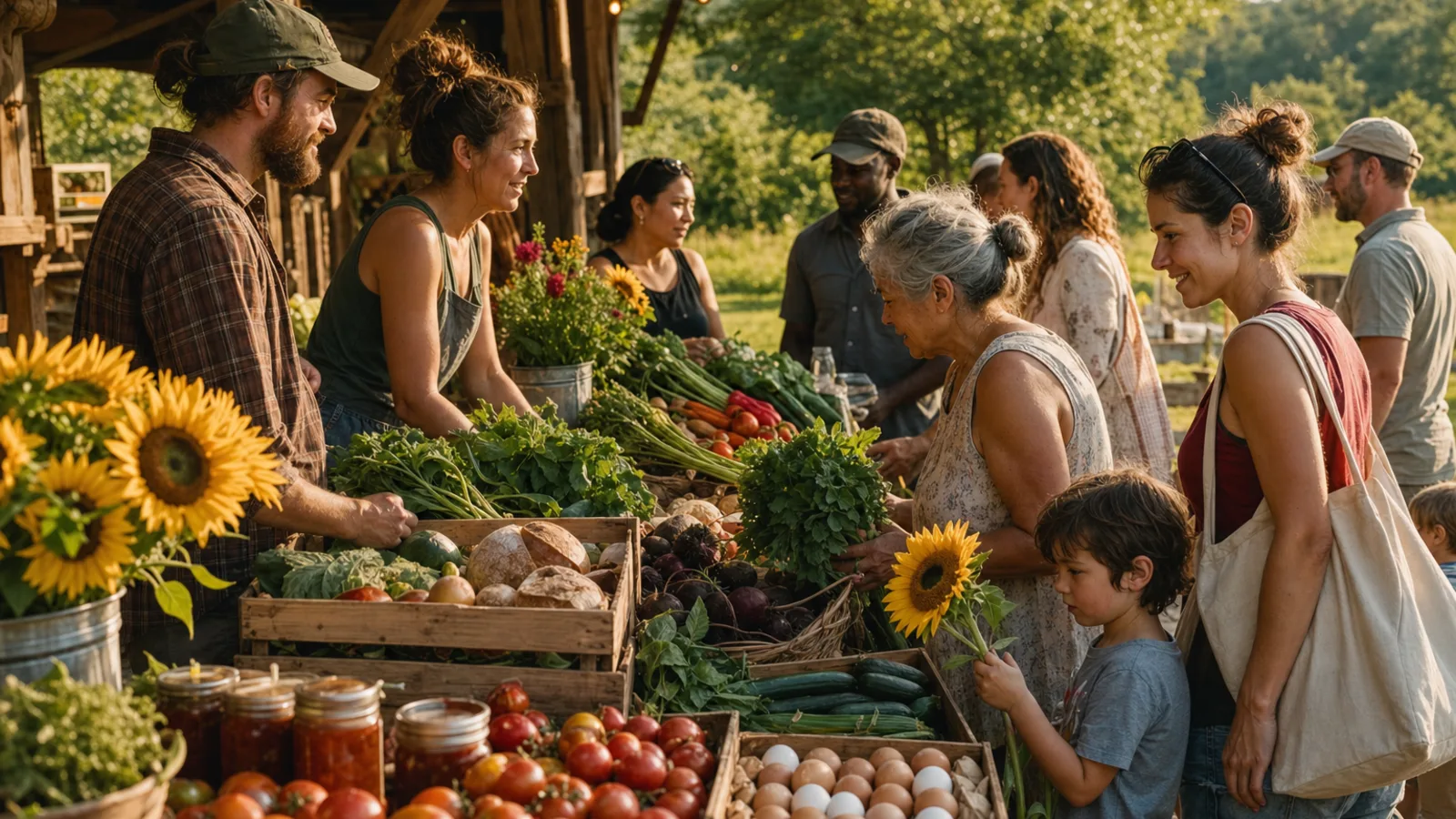
A farmstand is one of the few small businesses where the product, the place, and the story can still meet face to face. A neighbor sees the weather in a tomato, learns why strawberries finished early, and discovers who woke before sunrise to harvest the sweet corn. Those ordinary exchanges can make a stand part of a community.
Community does not appear because a farm puts out a chalkboard or hosts one busy festival. It grows from reliability, welcome, useful information, and repeated contact. It also requires boundaries. A farm is a workplace and a home as well as a public destination, and a good community plan respects all three.
Reliability is the first form of hospitality
Before adding events or decorations, make the basic visit dependable. Shoppers should be able to find the stand, understand when it is open, park safely, see prices, choose products, and pay without uncertainty.
Keep hours and seasonal availability current at the road, on social channels, and in your StandFinder listing. If a storm, crop failure, or family need changes the plan, post a direct update. “Closed Tuesday; reopening Friday at 3 p.m. with eggs and tomatoes” is more useful than “hours may vary.”
Consistency does not mean pretending the farm controls nature. It means saying what you know, correcting stale information, and following through on promises. Trust begins when a customer makes a trip and finds the experience reasonably close to what was described.
Design a place that welcomes more neighbors
Look at the stand from the perspective of someone visiting for the first time. They may not know where farm traffic moves, whether a dog is friendly, how an honor box works, or if children can approach a fence.
Provide:
- A clear, safe entrance and exit
- Firm, reasonably level paths
- Prices large enough to read without lifting products
- Shade or shelter where practical
- A place to set down a basket
- Instructions for payment and product handling
- Enough space to browse without blocking checkout
- A phone or message option for accessibility questions
Avoid narrow aisles, loose cords, unstable crates, and decorative objects that turn movement into an obstacle. If the site cannot meet every accessibility need, describe conditions accurately and offer practical alternatives such as prepacked pickup at a reachable point.
Language can widen the welcome. Where the community uses more than one language, translate the highest-value information: hours, payment, product names, allergens where relevant, and safety notices. Use plain wording and clear symbols, but do not rely on symbols alone for important instructions.
Tell the farm's story in useful pieces
Customers are interested in the grower, but they do not need a long speech at checkout. Share small, concrete stories connected to the product in front of them: why this tomato was chosen, how a cold night affected the peaches, or what the farm does with unsold greens.
Signs, short notes, photographs, recipe cards, newsletters, and Field Notes can carry the story when staff are busy. Focus on verifiable practices instead of broad labels. “Mulched beds and drip irrigation help us conserve water” is clearer than “planet-friendly.” If a product comes from a partner farm, name the source rather than allowing customers to assume it grew on site.
Invite questions, including difficult ones, and answer within your knowledge. It is acceptable to say that you will verify a detail. Trust grows when communication is specific and honest.
Learn names without making the experience exclusive
Regular customers bring stability and word-of-mouth, and remembering a favorite variety can feel genuinely neighborly. At the same time, a circle of long conversations around the payment area may make a new visitor feel that they have entered a private club.
Greet people when possible, explain the layout, and give them space to browse. Move longer conversations to the side when others need to check out. Train staff and volunteers to offer the same helpful basics to unfamiliar shoppers as to close friends.
Respect privacy. Do not add someone to a mailing or text list without clear permission. Do not photograph visitors, especially children, for promotion without appropriate consent. Community is strengthened by choice, not assumed access.
Create feedback loops that lead to action
A request notebook, brief seasonal survey, conversation log, or online question can reveal what neighbors cannot find locally. Ask focused questions: Which pickup time works? Which pack size is useful? Which vegetable needs a recipe? General requests for “feedback” often produce compliments but little guidance.
Group requests before changing the crop plan. One person asking for a rare pepper is a data point; twenty people asking for smaller egg packs is a pattern. Explain when a suggestion cannot be adopted because of climate, cost, law, food safety, or farm capacity.
Close the loop. A small note saying “You asked; Saturday evening pickup starts this week” shows that participation mattered. If a trial did not work, explain that too. Transparency keeps feedback from becoming an empty exercise.
Host small events with a clear purpose
Events should help people understand the farm, use seasonal food, meet one another, or access the stand—not simply create a crowd. Begin with a format your site, insurance, staff, parking, restrooms, food-safety system, and neighbors can support.
Useful small-scale ideas include:
- A tomato tasting with clearly identified varieties
- A short demonstration on storing winter squash
- A seed or recipe exchange with simple participation rules
- A scheduled farm walk on established public paths
- A preorder pickup paired with a local baker or maker
- A children's scavenger sheet completed with an adult
- A volunteer harvest for an established food-access partner
Check permits, insurance, accessibility, food sampling rules, handwashing, traffic control, animal separation, emergency plans, and weather contingencies before announcing an event. Set a capacity if parking or staffing is limited. A reservation system can be more welcoming than allowing the first large group to overwhelm everyone else.
Afterward, record attendance, sales, labor, cost, problems, and whether the event achieved its purpose. A modest gathering that creates repeat visits may be more valuable than a crowded day that damages crops or exhausts the team.
Partner locally without losing clarity
Farmstands can introduce neighbors to other local producers and organizations. A baker may use farm berries, a florist may offer seasonal bouquets, a library may distribute recipe resources, or a school garden may share an educational display.
Choose partnerships with aligned expectations. Put the agreement in writing, even when the partner is a friend. Clarify:
- Who owns inventory and bears loss
- Wholesale price, commission, or revenue share
- Delivery and pickup schedule
- Product labeling and source information
- Required licenses and insurance
- Food-safety responsibility
- Promotion and use of names or images
- What happens to unsold goods
Keep the farmstand's promise understandable. If half the table comes from elsewhere, shoppers deserve to know. Collaboration is not less local because it is labeled accurately.
Use food education to remove buying friction
Many customers skip an unfamiliar vegetable because they fear wasting money, not because they dislike it. One storage tip, preparation method, or tasting sample can change the decision.
Offer short, practical guidance:
- How to keep greens crisp
- Which tomato is best for sauce
- Whether squash skin is edible
- How much corn feeds a family
- How to freeze berries
- What to do with beet tops
Use sources you trust and avoid medical or nutritional promises. If sampling food, follow the applicable health and handwashing requirements. Link to a relevant Field Note when a topic needs more explanation than a card can hold.
Education can flow in both directions. Customers may bring cultural knowledge, recipes, and uses that are new to the farm. Ask permission before publishing someone's recipe or story, and give credit in the way they prefer.
Connect the physical stand to a useful online presence
Digital communication should reduce uncertainty around a real visit. The most valuable posts are often not polished advertisements; they are current hours, a product photo, a sold-out notice, road conditions, preorder deadlines, and a reminder that availability changes.
Maintain one authoritative listing and update it. Use recognizable directions and a map pin placed at the customer entrance, not at the center of a large property. Include parking, payment methods, accessibility notes, contact preferences, and whether pets are allowed.
Post at a pace the farm can sustain. A dependable weekly harvest update beats daily content that stops during the busiest month. If customers ask the same question repeatedly, improve the listing or sign rather than answering it individually forever.
Online community spaces can continue conversations about recipes, growing, and local availability. Set clear moderation rules so harassment, misinformation, and inappropriate promotion do not drive people away. The StandFinder community gives growers and shoppers a place to exchange local knowledge beyond the checkout table.
Build food access into the operation responsibly
Farmstands can support food access through accepted nutrition benefits where authorized, reduced-price seconds, community-funded vouchers, donation partnerships, or flexible pack sizes. Each approach has operational, financial, and regulatory requirements.
Choose a model the farm can maintain. Donation should not become a substitute for tracking overproduction, and discounted products should still be safe and clearly represented. Work with established organizations that understand storage, transportation, dignity, and distribution.
Avoid turning recipients into promotional content. Obtain meaningful consent before sharing personal stories or images. A community program should make local food easier to access without asking participants to trade privacy for it.
Be a considerate neighbor
More visitors mean more vehicles, noise, litter, questions, and potential trespass. Tell adjacent neighbors about significant hours or events before promotion begins. Mark customer areas and private areas clearly. Provide bins, manage dust and lighting, and keep vehicles from blocking driveways or mail delivery.
Post rules for animals, gates, picking, and photography. “Farmstand open” does not mean the entire farm is open for exploration. Train staff to redirect visitors calmly and document recurring issues that need a design solution.
If a customer behaves unsafely or disrespectfully, community values do not require tolerating it. Establish procedures for harassment, intoxication, unleashed animals, aggressive driving, and emergencies. Protect workers and visitors first.
Make room for the less visible community
Not everyone can visit during a Saturday festival. Shift workers, older adults, people with disabilities, caregivers, and families without flexible transportation may need different hours or pickup options.
Test one practical accommodation at a time: a short evening window, prepaid pickup, clearly packed small orders, a reachable pickup shelf, or collaboration with a community delivery program. Publish the limits accurately so staff are not asked to improvise services the farm cannot provide safely.
Seasonal employment is also part of community. Provide clear expectations, fair and lawful pay, training, rest, water, sanitation, safe equipment, and a way to raise concerns. The welcome customers feel should not depend on invisible strain behind the stand.
Respond to hard seasons with honest communication
Drought, smoke, flooding, disease, family emergencies, and equipment failure can reduce supply or close the stand. Customers do not need every private detail, but they do need accurate information.
Explain the practical effect: fewer berries, delayed opening, no U-pick, or a change to preorder pickup. Do not create false scarcity or imply that a purchase is charity. Offer ways to stay connected that fit the situation, such as a reopening update or a partner farm with available products.
During community emergencies, coordinate with established local agencies before positioning the stand as a response center. Good intentions can create traffic, storage, safety, or distribution problems without clear roles.
Measure community strength without reducing it to followers
Online reach is easy to count, but it does not fully describe local trust. Track a mix of indicators:
- Repeat visits or returning preorder customers
- Listing views that lead to directions or messages
- Event attendance compared with capacity
- Customer questions that decline after information improves
- Partner projects completed and renewed
- Food-access transactions or donations handled sustainably
- Complaints, safety incidents, and neighbor concerns
- Staff workload and willingness to repeat the activity
Add stories and observations, but protect personal information. Review whether the effort helped the people it was meant to serve and whether the farm can continue it.
A 12-week community-building rhythm
In the first four weeks, make the stand dependable: correct hours, map pin, entrance, prices, payment instructions, paths, and contact information. Ask five new visitors what was unclear.
In weeks five through eight, improve communication. Add three useful product notes, create an opt-in harvest update, identify repeated requests, and meet one nearby producer or organization without promising a project.
In weeks nine through twelve, test one small activity: a tasting, storage demonstration, preorder collaboration, or structured feedback question. Set a purpose and capacity. Review sales, labor, inclusion, safety, and whether participants returned.
Then repeat what worked instead of constantly inventing larger events.
Community grows through ordinary consistency
A local farmstand becomes important when neighbors know they will receive an honest answer, find a safe welcome, and learn something useful about the food and people around them. Events, partnerships, and online tools can deepen that relationship, but they cannot replace the basics.
Keep information current. Label sources accurately. Listen without promising everything. Protect boundaries. Make improvements that more people can use. Over time, the farmstand stops being merely a place where produce is sold and becomes a reliable thread in local life.
Explore other stands in the local marketplace, notice how they communicate their season, and share a practical lesson in the community forum. Strong local food networks are built stand by stand, conversation by conversation, and season by season.